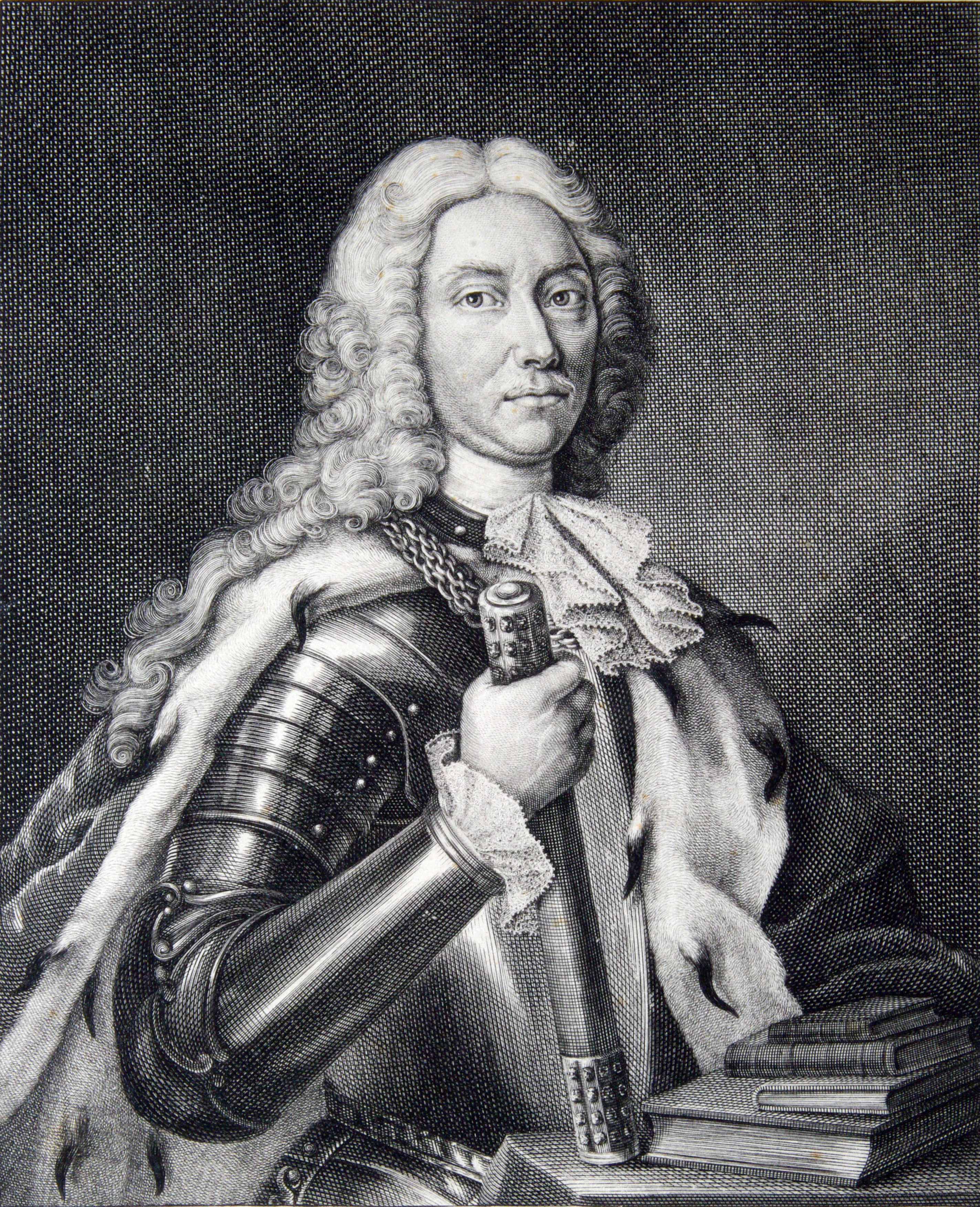
|
Dimitrie Cantemir: Dimitrie Cantemir Dimitrie or Demetrius Cantemir (Romanian pronunciation: [diˈmitri.e kanteˈmir] ⓘ; Russian: Дмитрий Кантемир, romanized: Dmitry Kantemir; 26 October 1673 – 21 August 1723), also known by other spellings, was a Moldavian prince, statesman, and man of letters. He twice served as voivode of Moldavia (March–April 1693 and 1710–1711). During his second term, he allied his state with Russia in a war against Moldavia's Ottoman overlords; Russia's defeat forced Cantemir's family into exile and the replacement of the native voivodes by Greek phanariots. Cantemir was also a prolific writer, variously a: philosopher, historian, composer, musicologist, linguist, ethnographer and geographer. His son, Antioch, Russia's ambassador to Great Britain and France and a friend of Montesquieu and Voltaire, would become known as "the father of Russian poetry". Dimitrie was born in Silişteni, Moldavia (now Vaslui County, Romania) on 26 October 1673 to Constantin Cantemir and Ana Bantăș. His mother was a learned daughter of a local noble family. In 1685, Constantin was named voivode of Moldavia by its Turkish overlords. Cantemir was a polyglot known as one of the greatest linguists of his time, speaking and writing eleven languages. Well-versed in Oriental scholarship, his oeuvre is voluminous, diverse, and original, although some of his scientific writings contain unconfirmed theories or simple inaccuracies. Between 1711 and 1719 he wrote his most important creations. In 1714, he was named a member of the Royal Academy of Berlin. Cantemir's best-known history work was his "History of the Growth and Decay of the Ottoman Empire".The original title was in Latin, "Historia incrementorum atque decrementorum Aulae Othomanicae". This volume circulated throughout Europe in manuscript for a number of years. It was finally printed in 1734 in London and was later translated and printed in Germany and France. It remained the seminal work on the Ottoman Empire up to the middle of the 19th century; notably, it was used as a reference for Edward Gibbon's own Decline and Fall of the Roman Empire. Later scholarship contests many points owing to the dubiousness of some of Cantemir's sources. 
|
Home
|Castles
|Monasteries
|Map
|Paintings
|Literature
|Music
|Sculptures
|Links
|Encounters
|E-mail
|Chat
|Messages
 Dracula's Castle Radio © Copyright 1997-2026 |